
Explained
Why is guessing an object's weight so hard?
Why does a small object feel heavier than a large one? The size–weight illusion, material expectations and one feathery game trap help explain bad weight guesses.
How Heavy? asks a rude little question: can you estimate mass from a picture? The picture offers no strain in your arm, no helpful thud on the table and no friend whispering the answer. You get shape, size, material and whatever suspiciously confident story your brain invents from them.
That shortcut is not stupidity. Before a lift, the nervous system has to predict how much force to use, and waiting for laboratory evidence would make unloading the dishwasher a very long evening. Research on image-only estimates shows how difficult the numerical task is; lifting experiments then reveal how size, material and experience can shape the expectations we bring to it.
A picture shows the object, not its mass
One small study tested almost exactly the How Heavy? problem. Four trained participants estimated 56 household objects from images and physical dimensions; they could use a ruler, hold a 454 g (1 lb) reference and received the answer after every trial. Taking the median of their four estimates for each object still produced a mean absolute percentage error of 58.3 percent. The authors explicitly caution that four people cannot settle human weight intuition, but the experiment demonstrates the central problem: a picture supplies clues about volume and material, not a direct mass reading.
Trick one: the smaller box feels heavier
The size–weight illusion is wonderfully unfair. Give someone a large and a small object with the same mass and the smaller object is usually judged heavier. In one controlled study, differently sized objects of 180 g (6.35 oz) produced a clear effect even when the visible amount of material was held constant; perceived heaviness shifted by roughly 12 g (0.42 oz) for each centimetre of size change. Your brain does not merely count how much material it can see — overall size itself gets a vote.
Sources: Scientific Reports , Nature Neuroscience
Trick two: materials place the opening bid
Looks matter before the lift begins. Experiments with cubes appearing to be metal, wood or expanded polystyrene found that people initially applied forces suited to the expected material: the metal-looking cube received the enthusiastic handshake. After a few lifts, their forces adjusted to the real mass, yet the material–weight illusion remained. The motor system corrected the invoice while conscious perception kept arguing with customer service.
Knowledge can sharpen the trap. In the golf-ball illusion, golfers — but not non-golfers — judged identically weighted practice and real golf balls differently because only the golfers arrived with a strong expectation about those object types. Expertise is useful, but it also gives your brain more confident ways to be wrong.
Sources: Journal of Neurophysiology , Perception
Your hands learn faster than your inner commentator
Repeated lifting does not force perception and action to agree. Flanagan and Beltzner showed that fingertip forces soon became accurate for equally heavy large and small objects while the smaller one continued to feel heavier. A later multiday experiment went further: people could eventually weaken and even reverse their learned size expectation, but conscious weight judgement changed far more slowly than the forces used to lift each object. Apparently the brain maintains separate notebooks, and one of them hates erasers.
Sources: Nature Neuroscience , Current Biology
The game trap: one eagle, approximately one cat
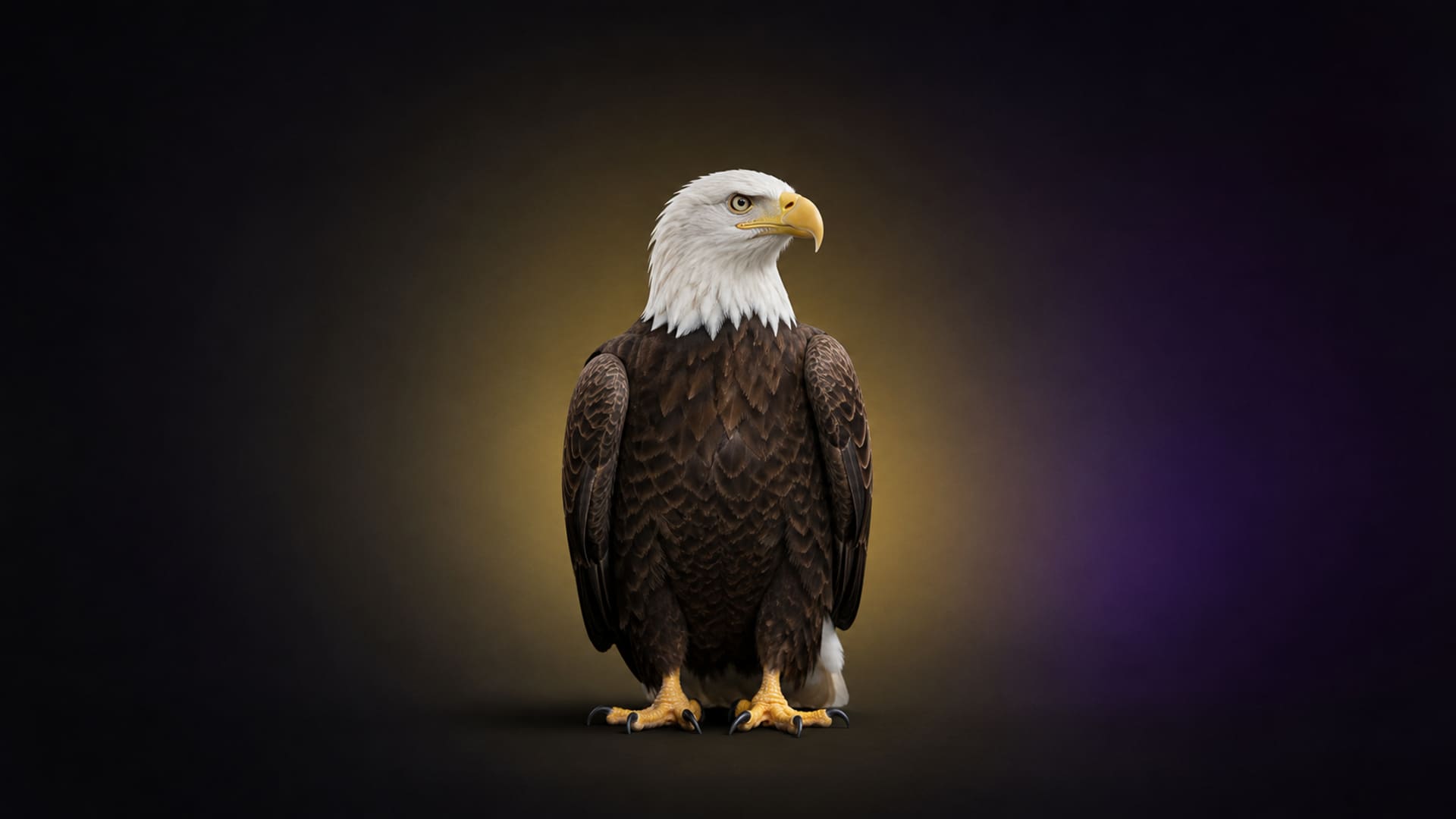
Consider a bald eagle beside a house cat. The eagle brings wings, talons and a public-relations department built around a two-metre silhouette; our representative catalog value is 4.7 kg (10.4 lb). The cat looks compact and domestically negotiable at 4.5 kg (9.9 lb). The gap is only 200 g (7.1 oz). Feathers and wings create imposing volume without matching solid mass, so visual size is a terrible solo witness in this comparison.
Sources: Cornell Lab of Ornithology , Blue Cross
A better strategy than shouting a number at the screen
For the game, treat first impressions as a clue rather than a verdict. Identify the object family, ask whether most of the visible volume is solid, hollow, fluffy or mostly feathers, and compare it with an anchor you genuinely know. Feedback can build a richer library of examples, but this article does not claim that playing turns anyone into a calibrated laboratory scale. It merely gives your guesses a method — and your wrong answers better excuses.
Sources: Current Biology , Journal of Neurophysiology
The answer in one paragraph
Guessing weight from a picture is hard because the picture does not contain a direct mass reading. It offers uncertain clues about size, material and familiar object families. Lifting studies show that those expectations can systematically bend perceived heaviness and can persist even after the hands adapt to reality. That does not prove exactly how every How Heavy? guess is formed, but it explains why appearance deserves cross-examination. When a house cat and a bald eagle look like wildly different propositions, remember: your brain is not broken. It is simply entering a useful lifting system as a slightly chaotic quiz contestant.
Methodology & transparency
The image2mass experiment directly studied numerical estimates from pictures, but used only four trained participants who also received object dimensions and a physical reference; we report it as suggestive, not universal. The other studies concern objects being lifted. We use them to explain relevant perceptual shortcuts, not as direct measurements of player behaviour. Throughout, physical mass is kept distinct from subjective heaviness, and no single mechanism is presented as settled where researchers test several explanations.
The eagle and cat use rounded How Heavy? catalog anchors: 4.7 kg (10.4 lb) and 4.5 kg (9.9 lb). Cornell reports a broad adult bald-eagle range, while Blue Cross presents a healthy cat estimate as a general guide rather than a universal constant. The 200 g (7.1 oz) comparison is therefore a useful representative matchup, not a claim that every eagle and every cat nearly tie.
Last updated:
Sources
- image2mass: Estimating the Mass of an Object from Its Image — Proceedings of Machine Learning Research
- Independence of perceptual and sensorimotor predictions in the size–weight illusion — Nature Neuroscience
- Object size can influence perceived weight independent of visual estimates of the volume of material — Scientific Reports
- Living in a Material World: How Visual Cues to Material Properties Affect the Way That We Lift Objects and Perceive Their Weight — Journal of Neurophysiology
- The Golf-Ball Illusion: Evidence for Top-down Processing in Weight Perception — Perception
- Experience Can Change Distinct Size-Weight Priors Engaged in Lifting Objects and Judging their Weights — Current Biology
- Bald Eagle Identification — Cornell Lab of Ornithology
- Cat weight advice — Blue Cross